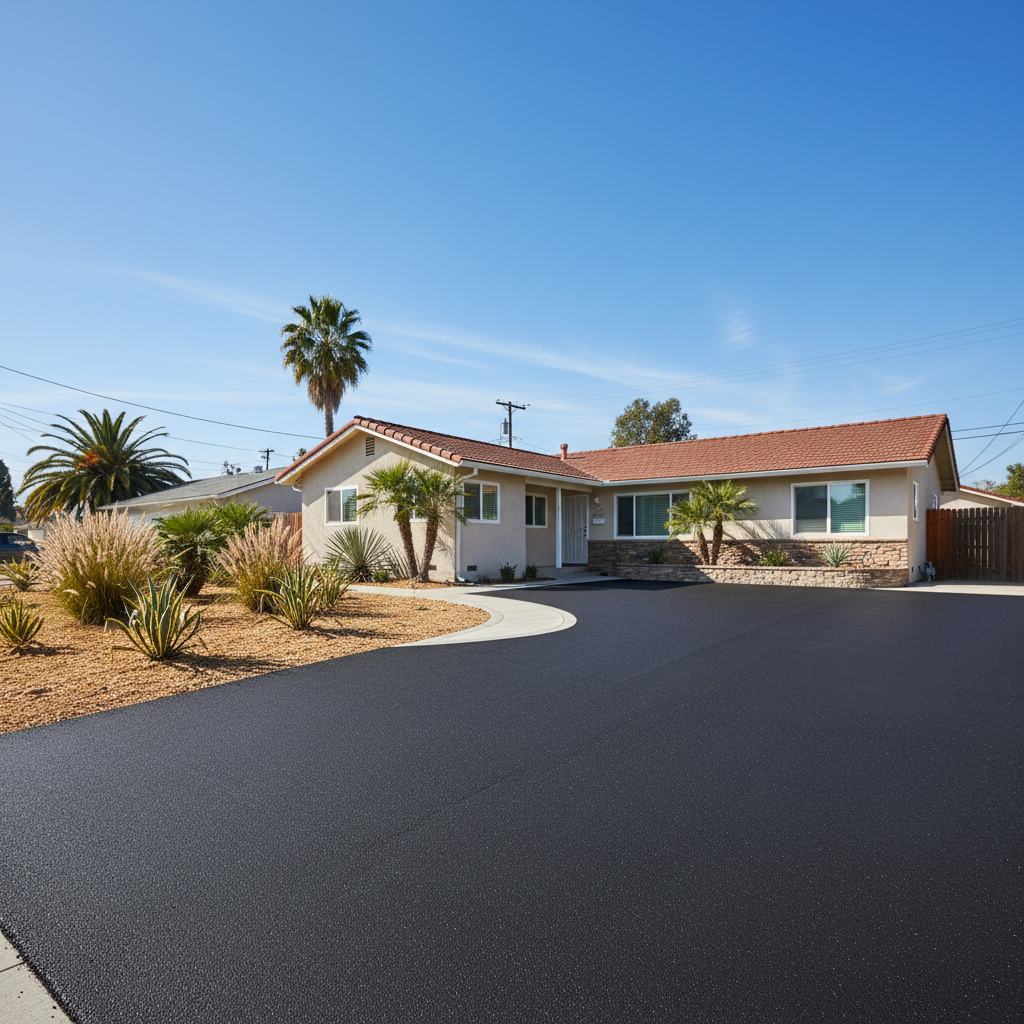
Alright, let's talk about asphalt driveways. You're probably wondering what it's going to cost to get a new one laid down here in Van Nuys. It's not just a simple square footage calculation, though I really wish it were that easy for everyone. There are a bunch of factors that play into the final price, and I'm going to walk you through them. That way, you'll know what to expect and how to spot a good deal from a bad one.
What Really Drives the Price Tag?
When I give you a quote, I'm looking at a few key things. These are the big hitters, the ones that determine whether your project lands on the lower or higher end of the spectrum:
- Size and Shape: This one's pretty obvious, right? A bigger driveway means more material and more labor. But the shape matters too. A perfectly rectangular driveway is easier and quicker to pave than one with a lot of curves, turns, or weird angles. Every cut and custom fit adds time, you know?
- Existing Conditions: Is there an old driveway there now? If so, what's it made of? If it's old asphalt or concrete that needs to be completely removed and hauled away, that's a significant cost. We've got to break it up, load it onto trucks, and then pay to dump it. If we're just overlaying existing asphalt that's in decent shape, that's a different story entirely, and usually cheaper.
- Sub-base Preparation: This is probably the most critical part of any paving job, and it's where a lot of less reputable contractors cut corners. The sub-base is the foundation under your asphalt. If it's not properly graded, compacted, and stable, your new asphalt just won't last. Here in Van Nuys, especially in some of the older parts of town where the soil can be a bit more expansive, getting the sub-base right is crucial. Sometimes we need to bring in new aggregate, compact it in lifts, and make sure the drainage is perfect. This takes time, equipment, and material.
- Asphalt Thickness: For residential driveways, I usually recommend at least 2 to 3 inches of compacted asphalt. Some folks might try to sell you on less, but you'll regret it when cracks start showing up sooner than they should. Thicker asphalt means more material, which means more cost, but it's an investment in longevity.
- Accessibility: Can we easily get our big trucks and paving equipment onto your property? If it's a tight squeeze, or we have to hand-shovel a lot of material because a paver won't fit, that adds to the labor time.
- Drainage: We always need to make sure water drains away from your house and off your property correctly. Sometimes this means installing catch basins, French drains, or making sure the grading is just so. Poor drainage is a recipe for disaster and premature pavement failure.
Typical Cost Ranges for Van Nuys Driveways
Okay, let's get to some numbers. For a standard residential asphalt driveway here in Van Nuys, you're generally looking at anywhere from $3 to $7 per square foot. That's a pretty wide range, I know, but it really depends on those factors I just mentioned.
Let's break it down a bit more:
- Basic Overlay (no major demo, good existing base): You might be closer to the $3-$4 per square foot mark. This is for when your existing asphalt is still pretty solid, just needs a fresh top layer.
- Full Replacement (demo, new base, new asphalt): This is where you'll hit the $5-$7 per square foot range, or even a bit higher for very complex jobs. This includes ripping out the old stuff, grading, compacting a new base, and laying down fresh asphalt.
So, for an average two-car driveway, say around 400-500 square feet, you could be looking at anywhere from $1,200 to $3,500 for an overlay, and $2,000 to $5,000+ for a full replacement. Keep in mind, these are just estimates. Every job is unique.
What Should a Good Quote Include?
When Majestic Asphalt Company gives you a quote, or any reputable contractor for that matter, it should be detailed. Don't accept a scrap of paper with just one number. You want to see:
- Detailed Scope of Work: Exactly what's being done. Is it demo? Hauling? Base preparation (how many inches of aggregate)? Asphalt thickness (how many inches compacted)?
- Materials Used: What kind of asphalt mix? What type of base material?
- Timeline: When they expect to start and finish.
- Warranty Information: What kind of guarantee do they offer on their work?
- Permits: Who's responsible for pulling any necessary permits? (Usually, the contractor handles this.)
- Total Cost: The final price, with no hidden fees.
How to Avoid Overpaying (and Getting Ripped Off)
This is crucial. You work hard for your money, and you don't want to throw it away on a bad job or an inflated price.
- Get Multiple Quotes: I always tell people to get at least three. It gives you a good baseline and helps you see who's being reasonable and who's trying to take advantage.
- Check References and Reviews: Look up the contractors online. Ask for local references. A good contractor will be happy to provide them.
- Don't Go for the Cheapest Bid: Seriously, the lowest price often means they're cutting corners somewhere. Maybe they're using less material, skipping base prep, or using inexperienced labor. You'll pay for it in repairs down the line.
- Ask Questions: Don't be afraid to ask about their process, materials, and experience. If they can't explain it clearly, that's a red flag.
- Verify Licensing and Insurance: Make sure they're licensed and insured. This protects you if something goes wrong. You can check with the CSLB (Contractors State License Board) here in California.
- Get Everything in Writing: Every detail, every cost, every promise. If it's not on paper, it doesn't exist.
A new asphalt driveway is a big investment in your home. Do your homework, ask the right questions, and choose a contractor who knows what they're doing. You'll be glad you did when your driveway looks great and lasts for years, even with our hot Van Nuys summers and the occasional heavy rain we get.