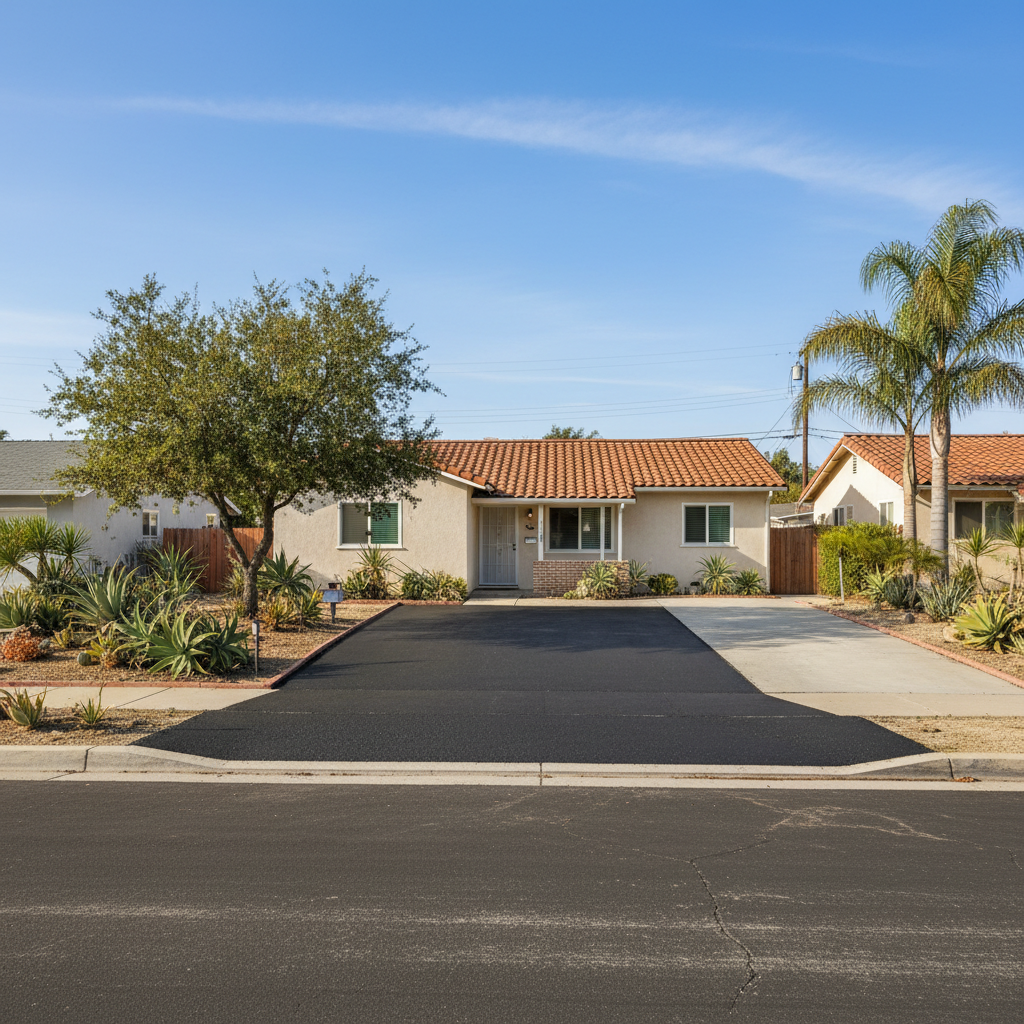
You've seen it, right? That annoying pothole or cracked section in your driveway, parking lot, or maybe even out on the street. You get it patched up, and then a few months later, it's back again. Or, even worse, a new one pops up right next to it. It's incredibly frustrating, and honestly, it's just a waste of your hard-earned money if the patching isn't done correctly.
Why Patches Don't Always Last Around Here
Look, patching isn't just about dumping some asphalt mix into a hole. Especially not here in Van Nuys. We face some pretty tough conditions that really put pavement to the test. Just think about our summer heat – those triple-digit days aren't only uncomfortable for us; they make asphalt expand. Then, when the cooler nights roll in, it shrinks. This constant pushing and pulling, what we call thermal cycling, puts a huge amount of stress on asphalt. If a patch isn't done right, it's just going to fail.
And then there's the soil. Many of our older neighborhoods, like those around the Sepulveda Basin, can have expansive clay soils. When it rains, that clay soaks up water and swells, pushing up on your pavement. When things dry out, it shrinks back, leaving voids underneath. This movement below the surface is a major reason for cracking and potholes. A patch that doesn't deal with the real problem, or at least consider it, is really just a temporary band-aid.
Common Patching Blunders I've Noticed
I've been in this business a long time, and believe me, I've seen all sorts of patching jobs – some good, some… not so good. Here are a few common mistakes that often lead to a patch failing too soon:
- Not cleaning the area properly: You can't just patch over dirt, loose junk, or standing water. The new asphalt won't stick, and it'll just pop right out.
- Bad cut-out technique: A lot of people just fill the existing hole. But often, the damage goes beyond what you can see. You need to cut out a clean, square or rectangular section into solid, undamaged pavement. This gives the new material strong edges to bond to.
- Skipping the tack coat: This one's a big deal. A tack coat is a thin layer of asphalt emulsion you put on the edges and bottom of the cut-out. It acts like glue, making sure the new patch sticks properly to the old pavement. Skip this step, and your patch is basically just sitting there, waiting for traffic to dislodge it.
- Not compacting enough: You really need to press down that new asphalt thoroughly. If it's not dense enough, water will seep in, and traffic will quickly break it apart. We're talking about heavy vibratory compactors here, not just stomping on it with your boots.
- Using the wrong stuff: Cold patch is fine for a super quick, emergency fix, but it's not a lasting solution. For repairs that need to hold up, especially in busy areas, you need hot-mix asphalt.
When to Patch or When to Repave
This is a question I hear all the time from homeowners and business owners. If you've only got a few isolated potholes or cracks, patching is definitely the way to go. It saves money and makes your existing pavement last longer. We do a lot of this for apartment complexes and commercial properties off Sherman Way and Van Nuys Blvd, where traffic is constant and small repairs are crucial for keeping things looking good and safe.
However, if your pavement looks like a jigsaw puzzle, with cracks everywhere, or if you see widespread alligator cracking (that pattern that looks like alligator skin), patching probably won't cut it. At that point, you're likely dealing with a structural problem in the base, and you'd be better off thinking about a bigger repair, like an overlay or even a full-depth replacement. Patching a completely ruined surface is like putting a band-aid on a broken leg – it just won't hold.
Why Knowing the Local Scene Matters for Patching
You might think asphalt is asphalt, but trust me, understanding the local conditions makes a huge difference. A company that's worked in Van Nuys for years, like Majestic Asphalt Company, really gets our specific challenges:
- Weather patterns: We know how our hot summers and those occasional heavy rains affect asphalt.
- Soil conditions: We're familiar with the expansive soils and how to lessen their impact on pavement.
- Traffic loads: We understand the types of vehicles and how much traffic different parts of Van Nuys see, from residential streets to commercial parking lots.
- Local rules: We're up to speed on any local codes or requirements for pavement repair.
When you hire a local pro, you're not just getting someone who knows how to lay asphalt; you're getting someone who knows your asphalt, your ground, and your weather. We'll figure out the real cause of the damage, not just fill the hole, which means you get a patch that actually lasts. Don't throw away your money on quick fixes that won't stand up to our Van Nuys conditions. Get it done right the first time.